Buying property is a big milestone — but for many first-time investors, the most confusing part is the property registry process.
Questions like:
- “How does property registration work?”
- “What documents are required?”
- “Is it complicated or risky?”
…can create hesitation and delay decisions.
The truth is:
👉 Property registration in India is simple — if you understand the steps.
In this guide, we break down the complete property registry process in India in a clear, easy-to-follow way — especially for buyers investing in Sonipat and Delhi NCR.
What is Property Registration?
Property registration is the legal process where ownership of a property is officially recorded with the government.
Once completed:
- You become the legal owner
- Your rights are protected by law
- The transaction becomes legally valid
👉 Without registration, property ownership is not legally secure.
Why Property Registry is Important
Skipping or delaying registration can lead to:
- Ownership disputes
- Legal complications
- Risk of fraud
A proper property registry process in India ensures:
- Legal ownership
- Transparency
- Security of your investment
Step-by-Step Property Registry Process in India
Let’s simplify the process so you know exactly what to expect.
Step 1: Property Verification
Before anything else, verify:
- Ownership details
- Land title clarity
- Approvals and permissions
👉 This is critical when considering real estate investment under 10 lakh, especially in developing areas.
Step 2: Agreement to Sell
Once you finalize the property:
- A sale agreement is prepared
- Terms and conditions are documented
- Advance payment is made
This agreement protects both buyer and seller before final registration.
Step 3: Stamp Duty & Registration Charges
You need to pay:
- Stamp duty (state-dependent)
- Registration fees
In Haryana (including Sonipat), these charges vary based on property value.
👉 This is an essential part of the property registry process in Sonipat.
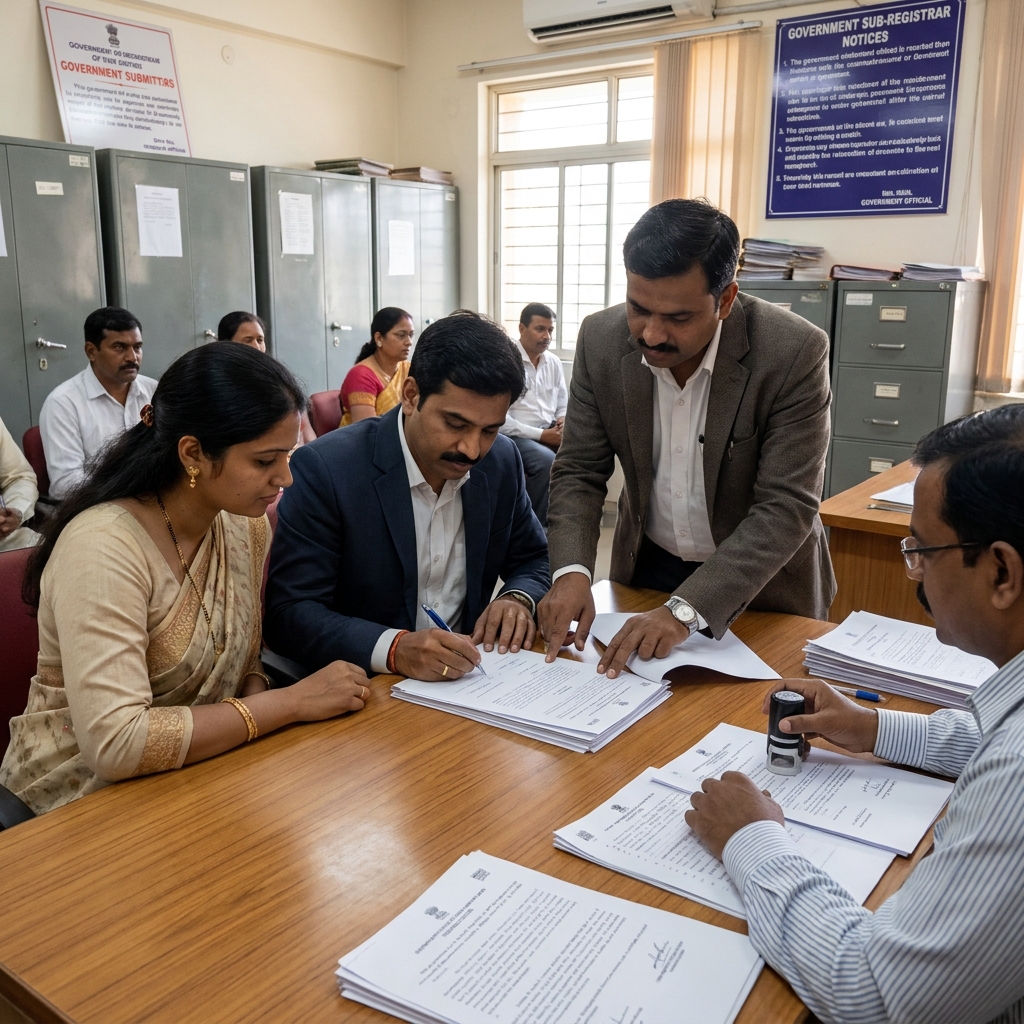
Step 4: Visit to Sub-Registrar Office
Both buyer and seller must visit the registrar office with:
- Required documents
- Identity proof
- Payment receipts
The property is officially recorded in government records here.
Step 5: Signing & Biometric Verification
At the office:
- Documents are signed
- Fingerprints and photos are taken
- Witnesses confirm the transaction
This ensures authenticity and prevents fraud.
Step 6: Final Registration & Ownership Transfer
After verification:
- The property is registered in your name
- You receive official ownership documents
👉 Congratulations — you are now the legal owner.
Documents Required for Property Registration
To complete the property registration process in India, you typically need:
- Sale deed
- Identity proof (Aadhar, PAN)
- Passport-size photographs
- Address proof
- Stamp duty receipt
- No Objection Certificates (if applicable)
Common Mistakes to Avoid
First-time buyers often make avoidable mistakes:
- Not verifying property documents
- Ignoring legal approvals
- Underestimating costs
- Choosing unreliable sellers
👉 These mistakes can turn a good investment into a risky one.
Why Location Matters in Property Investment
If you’re planning a real estate investment under 10 lakh, location plays a key role.
Areas like Sonipat (Delhi NCR) offer:
- Affordable entry price
- Growing infrastructure
- High appreciation potential
This makes plot investment in Sonipat a smart choice for new investors.
Why Choose Navdurga Group for Property Investment?
Property registration becomes easy when you work with the right partner.
Navdurga Group Real Estate Pvt. Ltd. ensures:
- Verified property options
- Complete documentation support
- Transparent transactions
- Assistance in registry process
- Guidance for first-time buyers
👉 From selection to registration, everything is handled smoothly.
📞 Ready to Invest Without Confusion?
Don’t let paperwork stop your investment journey.
👉 Contact Navdurga Group today for expert guidance and hassle-free property registration.
FAQs – Property Registry Process
What is the property registry process in India?
It is the legal process of transferring property ownership and registering it with the government.
How long does property registration take?
Usually, it can be completed within a day once documents and payments are ready.
What are the charges for property registration?
Charges include stamp duty and registration fees, which vary by state.
Is property registration mandatory?
Yes, without registration, ownership is not legally valid.
Can I complete the registry process without an agent?
Yes, but working with experts ensures a smoother and safer process.
Final Thought
Understanding the property registry process in India removes fear and builds confidence for first-time buyers.
With the right guidance, buying and registering property becomes simple, safe, and rewarding.
Navdurga Group helps you not just invest — but invest smartly and securely.
🚀 Take the First Step
👉 Explore property investment opportunities with Navdurga Group today.
